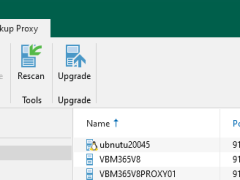
How to add Linux Backup proxy servers at Veeam Backup for Microsoft 365 8.2
Linux Backup proxy servers are auxiliary servers that you can configure to improve performance, scalability, and flexibility.

Linux Backup proxy servers are auxiliary servers that you can configure to improve performance, scalability, and flexibility.
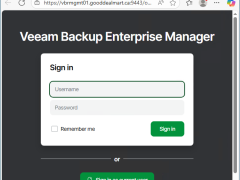
To execute an in-place upgrade of Veeam Backup Enterprise Manager on a server being upgraded to Windows Server 2025, Veeam Backup Enterprise Manager must first be upgraded to a compatible version.
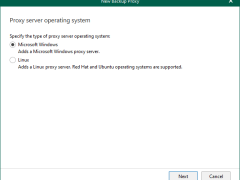
Veeam Backup for Microsoft 365 consists of Backup proxy servers, Backup Proxy Pools, Backup Local repositories, and Object storage repositories. These are configured as locations for Microsoft 365 backup data. These can be configured on-premises, in the cloud, or in a hybrid configuration.
Windows Backup proxy servers are auxiliary servers that you can configure to improve performance, scalability, and flexibility.
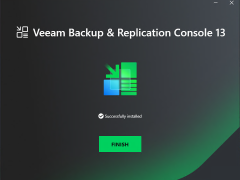
The Veeam Backup & Replication console is installed on the backup server automatically when you install Veeam Backup & Replication v13. You can utilize the web user interface (UI) or install the Veeam Backup & Replication console on a dedicated computer to access Veeam Backup & Replication remotely.
Veeam Backup Enterprise Manager v13 is a centralized management and reporting tool designed by Veeam Software for overseeing Veeam Backup & Replication deployments. It allows administrators to control and monitor their backup infrastructure through a web-based interface, making it easier to manage large-scale environments.
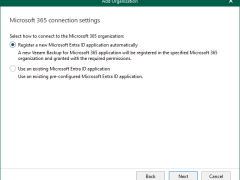
Registering a new Microsoft Entra ID application automatically is unavailable if you want to back up team chats and have selected Team chats at the Organization Deployment Type step.
Veeam Backup & Replication v13 is available for Microsoft Windows as self-managed installable software and as a fully managed software appliance.
The Veeam Backup & Replication console is installed on the backup server automatically when you install Veeam Backup & Replication v13. You can utilize the web user interface (UI) or install the Veeam Backup & Replication console on a dedicated computer to access Veeam Backup & Replication remotely.
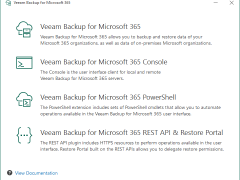
When you install Veeam Backup for Microsoft 365, the PowerShell Toolkit is automatically installed on the backup server. If you want to run Veeam Backup for Microsoft 365 PowerShell sessions on remotely, you can install the PowerShell Toolkit on a dedicated machine.
When you install Veeam Backup for Microsoft 365, its console is automatically installed on the backup server. If you want to access Veeam Backup for Microsoft 365 remotely, you can install the Veeam Backup for Microsoft 365 console on a dedicated machine. You can install as many remote consoles as you need.
Veeam Backup for Microsoft 365 is a complete solution that lets you backup and restore data from your Microsoft 365 organizations, including those that use Microsoft Teams, Microsoft Exchange, Microsoft SharePoint, Microsoft OneDrive for Business, and on-premises Microsoft SharePoint.
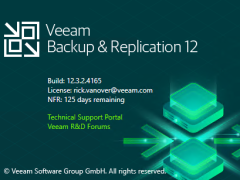
Veeam released the Backup & Replication v12.3.2.4165 on October 14, 2025.
Veeam Backup & Replication should be upgraded after Veeam Backup Enterprise Manager is upgraded.
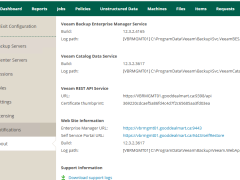
Veeam released the Backup & Replication v12.3.2.4165 on October 14, 2025.
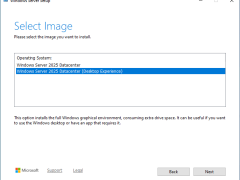
Today, I am going to show you how to perform an in-place upgrade of a Hyper-V server to Windows Server 2025.
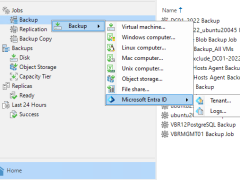
Veeam Backup for Microsoft Entra ID Logs to protect tenant audit and sign-in logs.
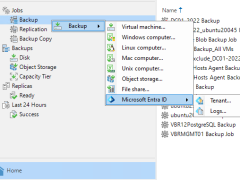
One backup job can protect the data of only one tenant.
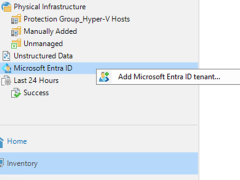
After you’ve added a Microsoft Entra ID tenant to the backup infrastructure, you can backup and restore Entra ID resources managed by the tenant.
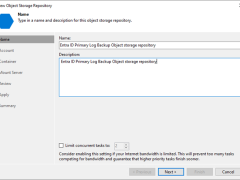
A log backup repository is a storage area where Veeam Backup for Microsoft Entra ID keeps backups of audit and sign-in logs from protected Microsoft Entra ID tenants.
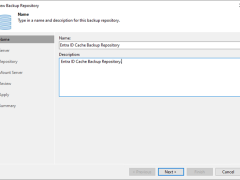
Beginning with version 12.3, the Veeam Backup & Replication solution allows you to add Microsoft Entra ID tenants to the backup infrastructure and manage data protection and recovery operations for these tenants from a single console.
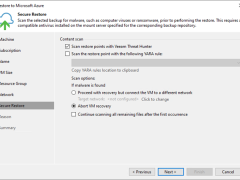
This section describes how to recover (or move) a backup VM to Microsoft Azure.